Key Takeaways
- Singapore estates are becoming more complex, making structured oversight essential for maintaining service standards, asset condition and stakeholder confidence.
- Traditional vendor arrangements can create gaps in communication, follow-up and accountability when several service providers work separately.
- A more unified operating structure helps councils, owners and asset managers strengthen reporting, escalation, vendor supervision and long-term planning.
- Strong estate support should balance smoother daily operations with practical cost control, clear responsibilities and decisions based on the property’s actual needs.
Introduction
Estate operations in Singapore have become more demanding as developments grow in scale, asset systems become more complex, and stakeholders expect higher standards of service continuity. For MCST councils, developers, corporate property owners, luxury residential estates, retailers, industrial landlords and financial institutions, facilities management is no longer limited to arranging routine maintenance or responding to defects. It now plays a direct role in protecting asset value, improving service coordination and ensuring that day-to-day estate operations remain reliable over time.
This is why more estates are reviewing the way maintenance, cleaning, security, technical support, vendor coordination, compliance and reporting are structured. The discussion is not only about facility management benefits, but also about whether traditional service arrangements are still suitable for increasingly layered estate environments. In Singapore’s compact and high-value property landscape, even small gaps in communication or accountability can affect resident satisfaction, tenant confidence, operating costs and long-term building performance.
For councils and owners, the priority is increasingly to have practical systems that suit the estate’s actual condition, service expectations and long-term upkeep needs.
Understanding The Benefits Of Structured Facilities Management
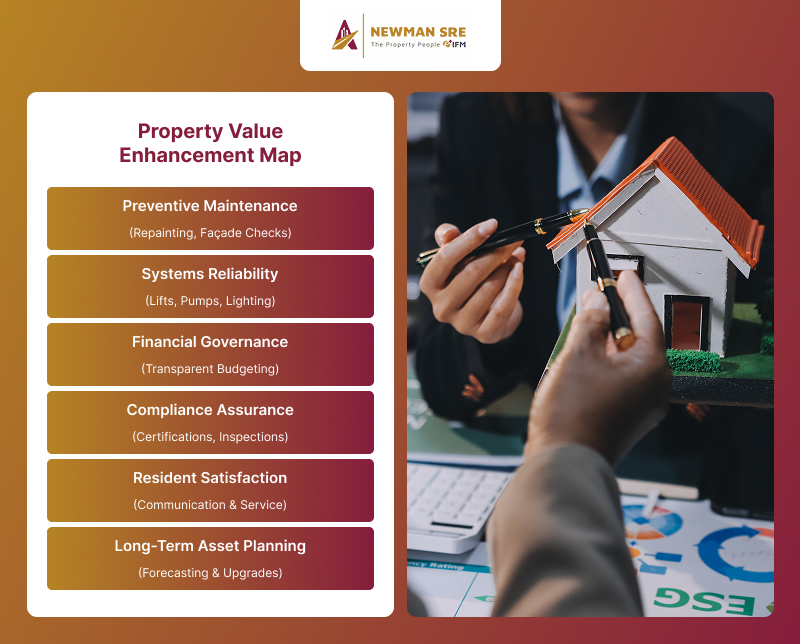
Structured facilities management gives estates a more defined system for managing shared spaces, technical systems and essential services. Instead of addressing issues only when they arise, a structured model helps management teams plan inspections, track maintenance schedules, monitor service standards and respond to concerns in a more consistent manner.
For residential estates, this may involve lifts, swimming pools, car parks, access systems, landscaping, security and common area cleaning. For commercial or industrial properties, it may also include mechanical and electrical systems, fire safety requirements, tenant coordination and contractor supervision. Where external vendors are appointed, proper oversight also helps ensure that service providers are suitable for the scope of work and aligned with relevant operational requirements.
One of the key benefits of facility management is that estate stakeholders gain better visibility into what needs attention, what has been completed, and what should be prioritised next. This is especially important because estates are both living environments and operating assets. When facilities management is handled with discipline, daily comfort, safety, compliance and long-term upkeep can be managed as part of one continuous process, rather than a series of disconnected tasks.
Why Estates Are Re-Evaluating Traditional Service Structures
Traditional estate service structures often involve multiple vendors working separately, with different teams handling cleaning, security, mechanical and electrical works, landscaping, pest control and ad hoc repairs. While this arrangement may be workable for simpler properties, it can create friction when responsibilities overlap or when urgent issues require quick coordination. For instance, a water seepage complaint may require inspection, resident communication, contractor follow-up, cost approval, documentation and further monitoring. If every party works in isolation, the process can become slower and less accountable.
This is why more estates are reviewing whether their current service arrangements still match their operational needs. Another important consideration is the ability to reduce gaps between planning and execution. A capable property management service should not only arrange vendors, but also help property owners and councils understand whether the existing operating structure supports the estate’s condition, risk profile, budget and stakeholder expectations. This is particularly relevant for ageing developments, mixed-use properties and estates with higher service standards.
No two developments operate in exactly the same way, so service planning should be shaped around the estate’s usage patterns, maintenance history and stakeholder priorities.
The Shift Towards More Integrated Management Approaches
As estate operations become more layered, many stakeholders are paying closer attention to how different service functions are planned, supervised and reported. A more integrated model is not about adding unnecessary complexity. It is about creating a practical framework for communication, responsibility, vendor oversight and long-term estate planning. When applied well, this gives councils, owners and asset managers a more organised way to review day-to-day service delivery without losing sight of longer-term asset care.
What An Integrated Model Looks Like In Practice
In practical terms, integration begins with bringing related estate functions into a more connected operating structure. Instead of treating maintenance, cleaning, security, technical support, reporting and vendor supervision as separate workstreams, an integrated facilities management approach allows these functions to be coordinated with greater consistency. This does not mean every estate needs the same service model. A luxury residential development, a commercial asset and an industrial property will each have different priorities, risk factors and service expectations.
What matters is whether the framework gives decision-makers a clearer view of estate performance. For MCST councils, this can support a better understanding of recurring issues, contractor performance and preventive maintenance needs. For developers and commercial property owners, it can help maintain service consistency across different buildings or asset types.
One practical benefit of facility management is that estate stakeholders receive more complete operational information, rather than fragmented updates from separate vendors. This can include service history, response timelines, contractor follow-through and upcoming maintenance priorities that are easier to review over time.
Why Integrated Oversight Matters For Estates
Integrated oversight matters because estate operations often involve decisions that cut across several service areas. A lift fault, water leakage, access control issue or recurring cleanliness concern may not sit neatly within one vendor’s scope. When responsibilities are managed separately, it can be harder to identify the root cause, assign follow-up and keep stakeholders properly informed.
For estates considering integrated facilities management in Singapore, the value lies in whether the model improves oversight without making the process rigid or difficult to manage. More transparent reporting can help councils, owners and asset managers understand what is happening on the ground, how quickly issues are being resolved and whether service providers are meeting agreed standards. This supports more confident decision-making, especially when estates need to plan repairs, renew contracts, evaluate costs or address recurring operational concerns.
Balancing Efficiency, Coordination And Cost Considerations
A more integrated structure should improve estate operations without making supervision harder to understand. For Singapore estates, the right model should support smoother communication, more disciplined reporting and practical cost decisions based on the estate’s actual needs, rather than a one-size-fits-all arrangement.
Improving Coordination Without Adding Complexity
Good coordination should make estate operations clearer, not heavier. In a well-managed structure, site teams, vendors, council members, owners and management representatives should be working from the same priorities. This helps reduce repeated follow-ups, unclear instructions and avoidable delays when operational issues require action from more than one party.
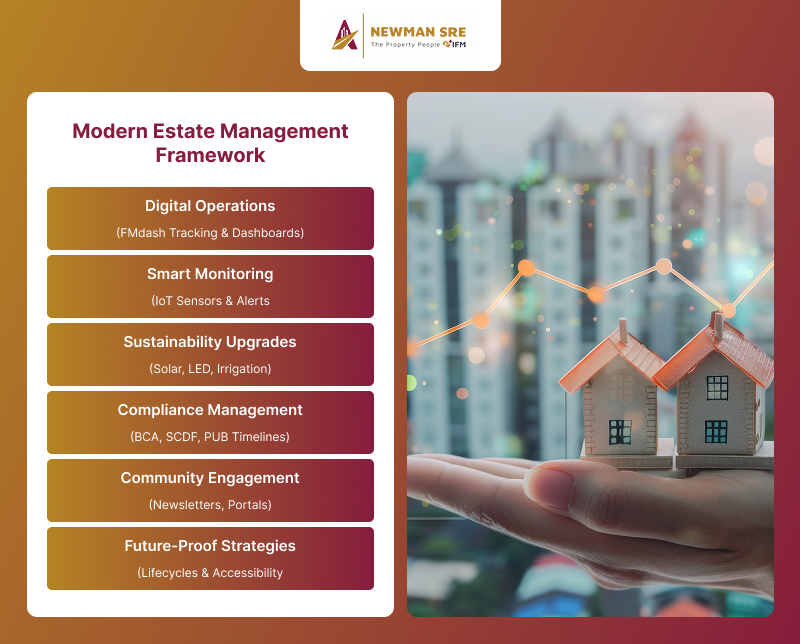
This is where coordinated estate operations become important. Shared reporting formats, proper escalation procedures, preventive maintenance calendars and clear follow-through can help estates manage daily issues with greater consistency. Instead of relying on informal updates or reactive troubleshooting, the estate can build a more reliable operating rhythm. This is particularly useful in developments where service quality, response time and resident or tenant communication have a direct impact on stakeholder confidence. It also supports more accountable follow-through, as each issue can be tracked from reporting to resolution rather than being handled as an isolated task.
Managing Costs With Better Operational Visibility
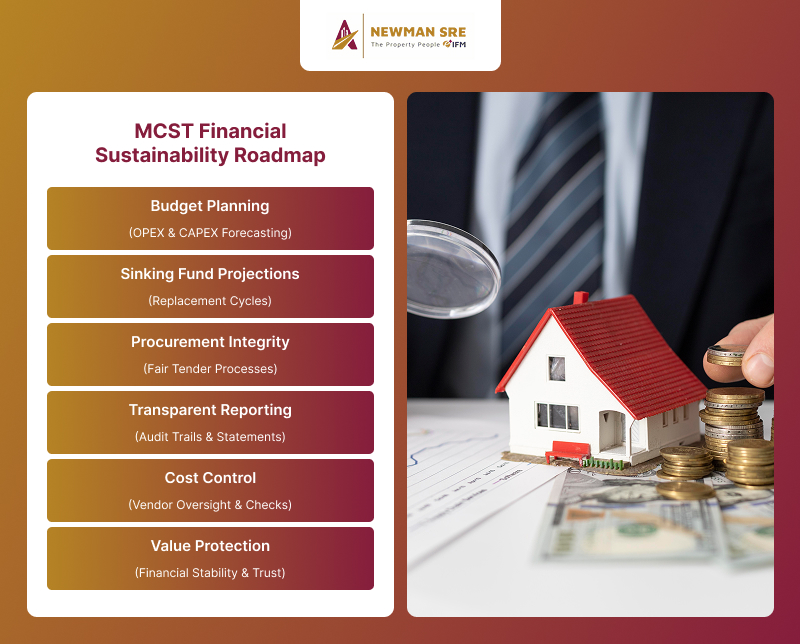
Cost management should not be reduced to choosing the lowest-priced service provider. In estate management, a cheaper contract may not deliver better value if it leads to repeated defects, poor response times, unclear accountability or higher repair costs later. A more useful approach is to understand how operational spending relates to service quality, asset condition and long-term maintenance needs.
Another practical advantage is the ability to compare operational performance against cost in a more meaningful way. When estates have clearer data on defects, response times, vendor performance, repair history and upcoming maintenance needs, they can make better decisions about contract renewal, procurement, budgeting and capital planning. This supports practical cost control while helping stakeholders avoid decisions that may solve short-term budget concerns but create larger operational issues later. For councils and owners, this makes cost discussions more grounded, because decisions can be based on service evidence rather than assumptions alone.
Moving Towards More Structured And Accountable Estate Management

The move towards integrated management is ultimately about accountability. Estates need more than vendors who complete individual tasks. They need a structure that connects daily operations with financial discipline, stakeholder communication, regulatory awareness and long-term asset care. This is where cost efficiency in estate management should be understood carefully. It is not simply about reducing expenditure. It is about preventing duplication, improving procurement discipline, reducing avoidable breakdowns and ensuring that every service contributes to the estate’s wider objectives.
A reliable managing agent in Singapore can help MCST councils, developers and property owners evaluate whether current service arrangements are working as intended, where operational gaps exist and how responsibilities can be made clearer. For estates with multiple vendors and recurring operational concerns, this may include structured reporting, vendor performance tracking, council updates and workflows that make follow-through easier to monitor.
In this context, the facility management benefits of a more structured model become more visible over time. Estates can move from reactive troubleshooting towards planned oversight, stronger documentation and more stable service outcomes. Through integrated facilities management and structured service coordination, Newman SRE supports developments in achieving operational clarity and long-term stability without turning estate management into an overly complicated process.
Conclusion
As Singapore estates continue to mature, the expectations placed on property management teams will only become more complex. Residents, tenants, investors, councils and owners expect faster responses, clearer communication, well-maintained facilities and prudent cost management. Traditional service structures may still be suitable for some properties, but estates with multiple systems, ageing infrastructure, higher stakeholder expectations or broader service requirements may benefit from a more integrated approach.
The most important facility management benefits come from defined responsibilities, transparent reporting, practical cost control and stronger accountability for estate performance. For property owners, developers, MCST councils and corporate entities, the shift towards integrated management should be guided by practical estate needs rather than industry terminology. When properly structured, facilities management becomes more than a support function. It becomes a steady operational foundation that protects asset value, improves daily service standards and gives stakeholders greater confidence in how the estate is being managed. This is especially important in Singapore, where estates often need to balance resident expectations, regulatory requirements, vendor performance and long-term maintenance planning within a compact built environment.
For estates looking to strengthen operational oversight, Newman SRE provides integrated estate and facilities support tailored to the needs of MCST councils, developers, property owners and corporate asset stakeholders in Singapore. Speak with us to review your current service structure and identify practical ways to strengthen coordination, accountability and long-term estate performance.