
Introduction
Singapore’s condominiums stand among the nation’s most significant long-term assets, yet the realities of ageing infrastructure, evolving lifestyles, and rising service expectations have made the stewardship of these estates more complex than ever. In this environment, effective condominium management plays a central role in safeguarding both everyday liveability and long-term asset performance, ensuring that each estate continues to meet the needs of its residents.
More than routine upkeep, thoughtful management supports financial discipline, regulatory adherence, and the kind of professional estate maintenance that preserves the integrity of shared facilities over time. As sustainability becomes increasingly important across the built environment, there is also a growing emphasis on sustainable condominium management to ensure that operational decisions contribute to long-term resilience.
This is where professional managing agents bring clarity and structure. Through transparent guidance, forward planning, and a deep understanding of estate operations, they help MCST councils navigate regulatory requirements, anticipate infrastructure needs, and strengthen community well-being. With the right support, condominium management in Singapore becomes a strategic lever for enhancing property value and meeting the expectations of modern urban living.
This article explores how contemporary practices elevate estate performance, support stronger community cohesion, and prepare condominiums to thrive in Singapore’s evolving property landscape.
Key Takeaways:
- How does effective condominium management strengthen property value?
- It ensures consistent maintenance, compliance, and operational reliability, which all contribute to higher long-term market desirability.
- Why is financial transparency important for MCSTs?
- Clear budgeting, documented procurement, and accurate reporting build trust among homeowners and reassure potential buyers.
- How does governance influence an estate’s performance?
- Strong governance provides stability, reduces disputes, and signals credibility, factors that positively shape valuation over time.
- What role does technology play in modern estate management?
- Digital tools, IoT monitoring, and platforms like FMdash improve efficiency, response times, and data-driven decision-making.
- Why is sustainability essential for future-ready estates?
- Energy-efficient upgrades and environmentally responsible practices align with national goals while reducing long-term operational costs.
- How do managing agents contribute to community well-being?
- Through communication, balanced mediation, and responsive service, they help create a cohesive, satisfied residential environment.
Why Property Value Depends on Effective Condominium Management
2.1 How Does Professional Management Influence Asset Value?
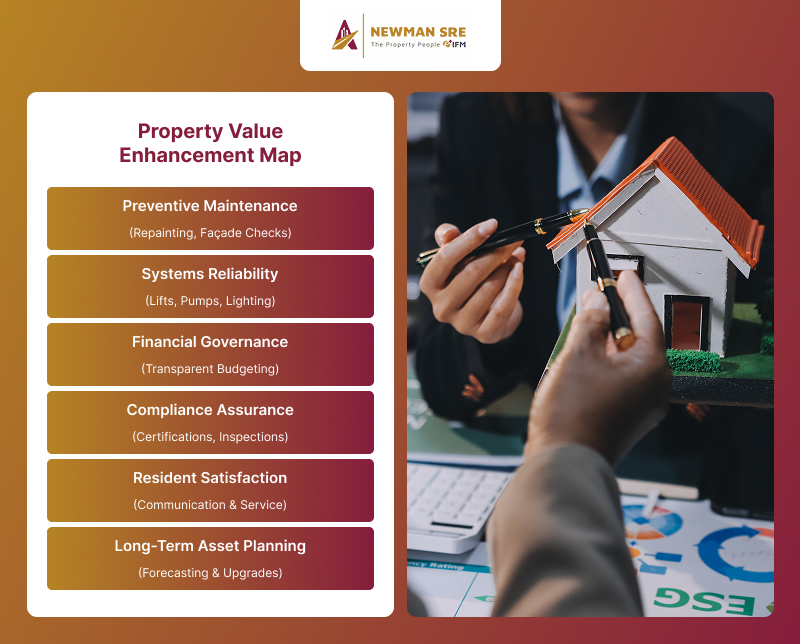
In Singapore’s competitive property market, estates that demonstrate consistent care, visual appeal, and operational reliability naturally achieve stronger rental and resale outcomes. Effective condominium management in Singapore supports this by ensuring that every essential system, from lifts and pools to lighting and security infrastructure, receives timely servicing and close monitoring.
Professional managing agents help MCST councils implement structured, preventive approaches that address wear and tear well before it becomes a costly defect. Measures such as repainting programmes, façade inspections, waterproofing schedules, and even energy-efficient lighting upgrades form the foundation of long-term asset value preservation, improving both day-to-day liveability and the estate’s overall valuation.
2.2 Why Do Governance and Transparency Matter to Property Owners?
Strong governance directly affects market confidence. When financial processes are transparent, procurement is well-documented, and expenditures are properly accounted for, owners feel secure about how their estate funds are being managed. Managing agents play a stabilising role by ensuring budgets follow BSMA guidelines, audit trails remain accessible, and reporting is delivered clearly and consistently. This foundation is essential to effective condominium management in Singapore, where clear oversight contributes directly to estate stability and long-term value.
Open communication, whether during AGMs, council discussions, or routine circulars, reduces uncertainty and prevents misinformation. This clarity not only strengthens internal trust but also enhances the estate’s attractiveness among prospective buyers and investors, supporting its long-term appeal.
2.3 What Is the Connection Between Compliance and Long-Term Value?
Regulatory compliance is one of the most critical pillars of compliance in property management, yet it is often the least visible until something goes wrong. Lapses such as expired fire-safety certificates or unauthorised modifications can result in fines, operational disruptions, or loss of buyer confidence.
Managing agents safeguard the estate by tracking renewal timelines, coordinating required inspections, and liaising with agencies such as BCA, PUB, SCDF, and NEA to ensure that all permits remain up to date. With the Building Maintenance and Strata Management Act transitioning to the Building (Strata Management) Act from 1 October 2025, these responsibilities will become even more significant.
When estates remain compliant, they protect their safety record, uphold public reputation, and preserve operational continuity, all essential for sustaining long-term value.
The Managing Agent’s Role in Value Preservation and Growth
3.1 How Do Managing Agents Strengthen Financial Sustainability?
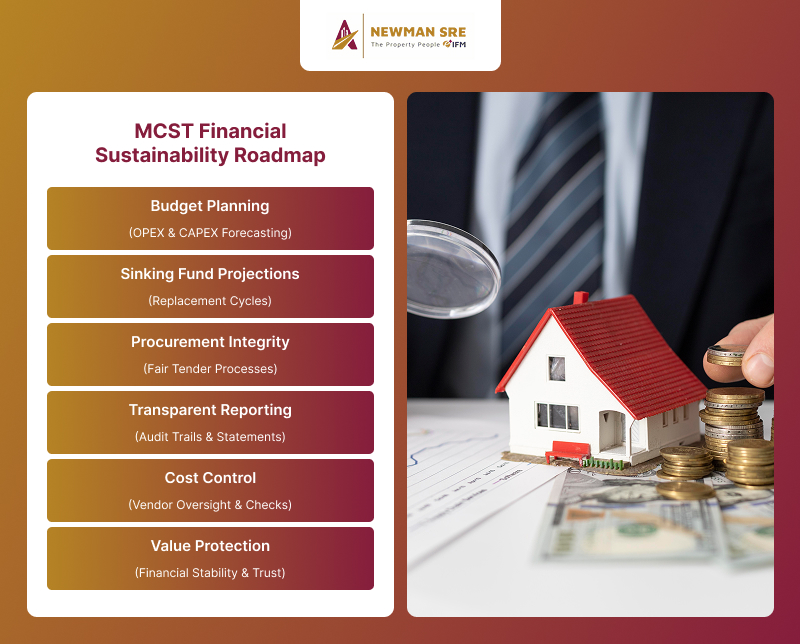
Strong financial governance is central to long-term estate stability. Managing agents help councils develop maintenance funds and sinking-fund projections that follow expected replacement cycles, enabling clearer preparation for major works such as lift modernisation or façade repainting. These structured forecasting processes reinforce the broader impact of effective condominium management in Singapore, ensuring estates remain financially resilient over the years.
Transparency remains equally important. Clear invoicing, disciplined payment controls, and properly documented approvals build confidence among owners and prospective buyers. This reliability is closely aligned with what residents may expect when reviewing residential real estate valuation services, as financial clarity directly influences perceived long-term value.
3.2 How Does Vendor and Contractor Oversight Protect Investment?
Managing agents ensure that every contractor engaged for estate works adheres to proper standards, safety requirements, and performance expectations. Tender exercises are conducted with fairness and transparency, creating a clear audit trail that protects both the estate and MCST council.
Ongoing supervision, through site checks, inspections, and periodic audits, helps maintain workmanship quality and operational stability. This structured oversight is a core component of effective condominium management, reflecting the standards often applied in broader estate management in Singapore, helping estates maintain predictable costs while preserving the condition of shared facilities.
3.3 How Does Stakeholder Engagement Support Value Retention?
Community engagement forms a significant part of cultivating a desirable living environment. Through newsletters, notice boards, digital updates, and prompt responses to resident queries, managing agents foster stronger communication and a more cooperative estate culture.
They also mediate differing expectations, such as balancing renovation noise concerns with owners’ timelines, while maintaining fairness and clarity for all parties. This level of responsiveness helps enhance satisfaction, reduce turnover, and strengthen the estate’s reputation, which remains an important consideration when homeowners compare reputable property management companies in Singapore.
Modernising Condominium Management for a Changing Singapore
4.1 How Is Technology Transforming Estate Operations?
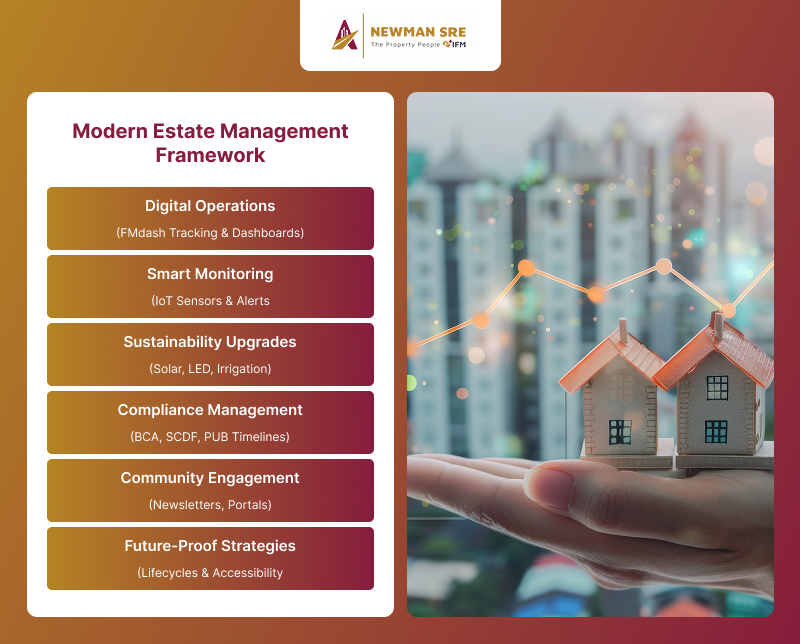
As estates grow more complex, technology has become essential to supporting effective condominium management in Singapore. Cloud-based dashboards now allow MCST councils to track maintenance tasks, contractor schedules, and payment histories in real time. IoT sensors provide early alerts for leaks, lift faults, or abnormal energy consumption, enabling estates to act before issues escalate into costly breakdowns.
Digital reporting through mobile apps also improves responsiveness, giving residents a straightforward way to submit defects while enhancing transparency and service speed. These advancements reflect the growing importance of smart building management solutions, where data-driven insights strengthen operational planning and budget accuracy.
Newman drives this transformation with FMdash, an integrated facilities management platform that centralises communication, task coordination, and compliance reporting. FMdash strengthens day-to-day oversight through streamlined workflows and clear accountability, but it is not intended to replace a full CMMS, instead supporting estates with practical, operational visibility for MCST needs.
FMdash, as part of Newman’s broader approach to integrated facilities management in Singapore, helps reduce administrative load while strengthening operational visibility. The Advancer IoT system complements FMdash by monitoring pumps, lighting, and HVAC systems in real time, giving councils accurate insights for predictive maintenance and smarter energy optimisation.
These tools align with emerging industry standards help estates transition smoothly into a more connected, efficient era of estate operations.
4.2 What Is the Role of Sustainability in Modern Estate Management?
Sustainability now plays a significant role in shaping long-term estate appeal and operating efficiency, making it an important part of contemporary condominium management in Singapore. Managing agents increasingly support MCSTs in adopting measures such as solar PV installations, LED retrofits, and smart irrigation systems, initiatives that reduce energy usage and minimise water consumption.
Efforts to achieve BCA Green Mark certification further enhance environmental credibility and resonate with eco-conscious residents who value responsible living. While Green Mark does not apply automatically to every existing development unless significant retrofitting or voluntary certification is pursued, the principles behind it still guide stronger environmental performance. These measures position estates to benefit from lower utility costs while demonstrating alignment with national goals such as Singapore’s Green Plan 2030. This is at the heart of sustainable condominium management, ensuring that estates remain resilient, resource-efficient, and future-ready.
4.3 How Can Managing Agents Future-Proof Estates?
Modern condominium management in Singapore requires forward planning that anticipates demographic shifts, infrastructure ageing, and technological advancement. Estate masterplans should incorporate lifecycle forecasting, reserve-fund sufficiency, and technology adoption timelines so MCSTs can prepare for key capital works well ahead of need.
Upgrading accessibility features, such as ramps, lift enhancements, and elderly-friendly pathways, supports Singapore’s ageing population and keeps estates inclusive. Continuous risk assessments across mechanical systems, fire safety, and cybersecurity also strengthen resilience and insurability.
These collective efforts reinforce long-term asset value preservation, enabling estates to remain desirable, competitive, and well-positioned for future expectations.
Frequently Asked Questions
How does professional condominium management increase property value?
Effective condominium management ensures that maintenance, compliance, and financial planning are handled with consistency and transparency. By preventing deferred repairs, improving operational efficiency, and maintaining high living standards, well-managed estates preserve both their physical condition and market desirability, key factors in long-term property appreciation.
What are the responsibilities of a managing agent in Singapore?
A managing agent oversees the daily operations of a condominium or strata-titled estate. This includes vendor coordination, financial management, compliance with authorities such as BCA and SCDF, and communication with residents and the MCST council. Their expertise ensures the estate functions smoothly, safely, and in accordance with the Building (Strata Management) Act.
How can sustainable practices benefit condominium estates?
Sustainability reduces energy costs, improves environmental performance, and enhances the estate’s reputation. Managing agents support MCST councils in adopting initiatives such as solar panels, LED lighting, and water-saving systems. These measures align with Singapore’s Green Plan 2030 and contribute to both environmental and financial value.
Conclusion
Effective condominium management in Singapore plays a pivotal role in maintaining both the liveability and financial performance of modern estates. Professional managing agents ensure regulatory compliance, financial transparency, and proactive maintenance planning, protecting estates from costly deterioration. Sustainable initiatives and smart technologies further strengthen long-term asset value while aligning with Singapore’s national green goals.
Open communication, community engagement, and data-driven decision-making enhance resident satisfaction and support positive property perception. A forward-looking management approach future-proofs estates, ensuring they remain relevant, efficient, and competitive in Singapore’s evolving property market.
Partner with Newman to experience professional, transparent, and sustainable condominium management that elevates both property value and community well-being.


